Downfalls of Self-Managing Your Rental Property (What Owners Miss)
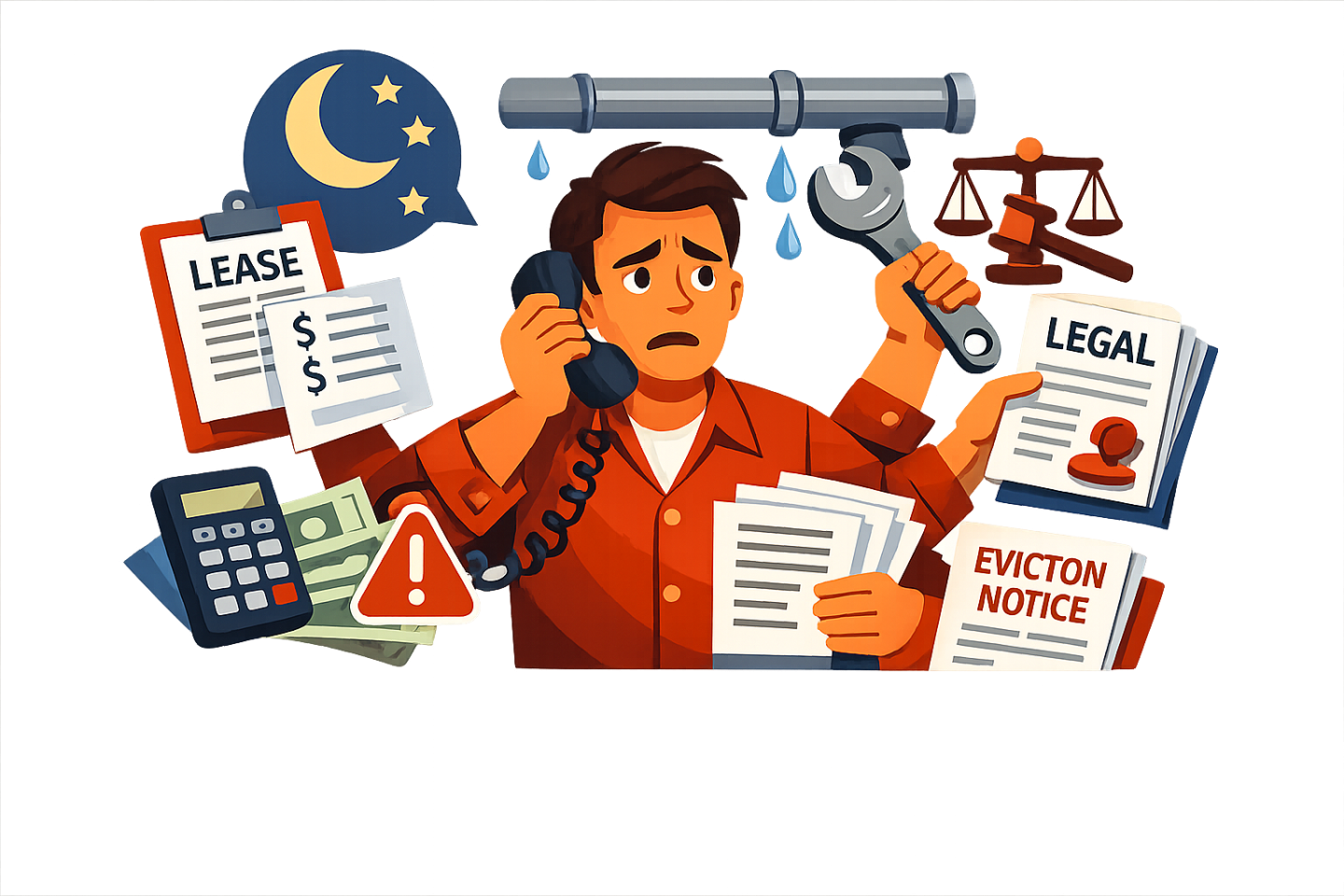
Downfalls of Self-Managing Your Rental Property (What Owners Miss)
If you own a rental property, you’ve probably asked yourself this question at least once: “Why should I pay a property manager when I can do this myself?”
On the surface, self-managing looks simple. You collect rent, call a plumber when something breaks, and post a listing when the unit goes vacant. How hard can it be?
But behind every “easy” rental is a growing list of hidden costs, legal risks, time drains, and missed income opportunities that most owners don’t see until they’re deep into the process.
In this guide, we’ll walk through the real-world downfalls of self-managing your rental property—based on what landlords consistently run into—and explain when professional management stops being an expense and starts being a profit multiplier.
The Hidden Cost of “Saving” on Property Management
Most owners self-manage for one main reason: to avoid paying a management fee.
What often gets overlooked is what that fee replaces:
-
Hours of unpaid labor
-
Legal exposure
-
Pricing mistakes
-
Vendor coordination
-
Tenant screening risk
-
Missed rent and longer vacancies
Let’s break down what those costs look like in the real world.
Your Time Is More Valuable Than You Think
Self-managing isn’t a side task—it’s an on-call job.
You’re responsible for:
-
Late-night maintenance calls
-
Showing properties on evenings and weekends
-
Chasing late rent payments
-
Coordinating repairs
-
Handling complaints and disputes
-
Tracking paperwork, leases, and renewals
The Reality Check
If you spend just:
-
3 hours per week managing one property
-
At a personal value of $50/hour
That’s $7,800 per year in unpaid labor—for a single rental.
Now multiply that across multiple properties.
Original Insight: Most landlords don’t fail because they don’t know how to manage—they burn out because they underestimate how often management interrupts their personal and professional life.
Legal Risk Is the Silent Killer
Landlord-tenant law is one of the fastest-changing legal areas in real estate. A single mistake can cost more than years of management fees.
Common Legal Pitfalls
-
Improper notices (3-day, 7-day, or entry notices)
-
Mishandled security deposits
-
Fair Housing violations
-
Illegal lease clauses
-
Improper evictions
-
Inconsistent tenant screening standards
Real-World Example
A landlord denies an applicant without documenting objective screening criteria. The applicant files a Fair Housing complaint. Even if the landlord “wins,” legal defense costs can reach thousands of dollars.
Professional managers:
-
Use legally vetted leases
-
Apply consistent screening standards
-
Track compliance timelines
-
Stay updated on local and state law changes
Pricing Mistakes Cost You More Than You Realize
Setting rent isn’t guesswork—it’s market analysis.
Self-managing landlords often:
-
Overprice and sit vacant too long
-
Underprice and leave money on the table
-
Fail to adjust pricing based on seasonal demand
The Vacancy Math
Let’s say your rent is $1,500/month.
If your unit sits vacant for just one extra month, that’s:
-
$1,500 lost
-
Plus utilities, lawn care, and marketing costs
-
Plus your time showing the property
A professional manager who fills the unit even 2 weeks faster can often pay for their fee just in reduced vacancy.
Tenant Screening Is Harder Than It Looks
Good tenants don’t just pay rent—they protect your property and reduce stress.
Bad tenants cost:
-
Missed rent
-
Legal fees
-
Property damage
-
Neighbor complaints
-
Eviction costs
-
Lost time
What Many Owners Miss
Tenant screening isn’t just about credit score. It includes:
-
Rental history verification
-
Employment and income stability
-
Eviction records
-
Criminal background (within legal limits)
-
Pattern recognition across multiple applications
Original Insight: Most “problem tenants” look great on paper. It’s the small inconsistencies in their history that usually predict future issues.
Professional managers see hundreds of applications per year. Patterns become obvious in ways a single-property owner rarely notices.
Maintenance Gets More Expensive When You’re Alone
Most self-managing landlords use:
-
Google searches
-
Emergency calls
-
Whoever answers the phone first
This usually means:
-
Higher prices
-
Slower response times
-
Inconsistent quality
The Vendor Network Advantage
Professional property managers:
-
Have pre-negotiated vendor rates
-
Use trusted contractors
-
Track repair history by property
-
Catch small issues before they become big ones
A $150 fix today can prevent a $3,000 repair later.
Emotional Involvement Creates Bad Business Decisions
When it’s your property, everything feels personal.
This leads to:
-
Letting late rent slide
-
Delaying necessary rent increases
-
Avoiding difficult conversations
-
Accepting partial payments without a plan
-
Giving “one more chance” too many times
Professional managers act as a buffer between you and the tenant. That emotional distance often leads to:
-
Better rent collection
-
Faster conflict resolution
-
Stronger lease enforcement
Paperwork and Record-Keeping Add Up Fast
You’re responsible for:
-
Lease agreements
-
Addenda
-
Move-in/move-out reports
-
Rent ledgers
-
Maintenance logs
-
Notices
-
Tax documentation
-
Owner statements
If you ever face:
-
A legal dispute
-
A tax audit
-
A tenant complaint
Missing documentation can work against you fast.
Scaling Becomes Almost Impossible
One property is manageable.
Two is harder.
Five becomes a second job.
Ten becomes a business.
Without systems, software, and support, growth turns into chaos. This is where many investors stall—not because they lack capital, but because they lack infrastructure.
Case Study: The Accidental Property Manager
A local investor bought three single-family rentals as “passive income.”
Year one:
-
Self-managed
-
Saved on fees
-
Felt in control
Year two:
-
One eviction
-
Two major repairs
-
Late-night calls
-
Missed rent from a long vacancy
By year three, they hired a professional manager—not because they couldn’t manage, but because they didn’t want their “investment” running their life.
Their biggest regret?
“I didn’t realize how much money I was losing by trying to save money.”
When Self-Managing Does Make Sense
To be fair, self-managing can work if:
-
You live very close to the property
-
You understand local landlord-tenant law
-
You enjoy administrative work
-
You have reliable vendors
-
You have time during business hours
-
You plan to stay small
But for owners focused on ROI, growth, and peace of mind, professional management often becomes a strategic decision—not a convenience.
The True Question to Ask Yourself
Instead of asking:
“How much does property management cost?”
Ask:
“How much is my time, reduced risk, and higher performance worth?”
Because the biggest cost in rental ownership usually isn’t the management fee—it’s what you lose without proper systems in place.